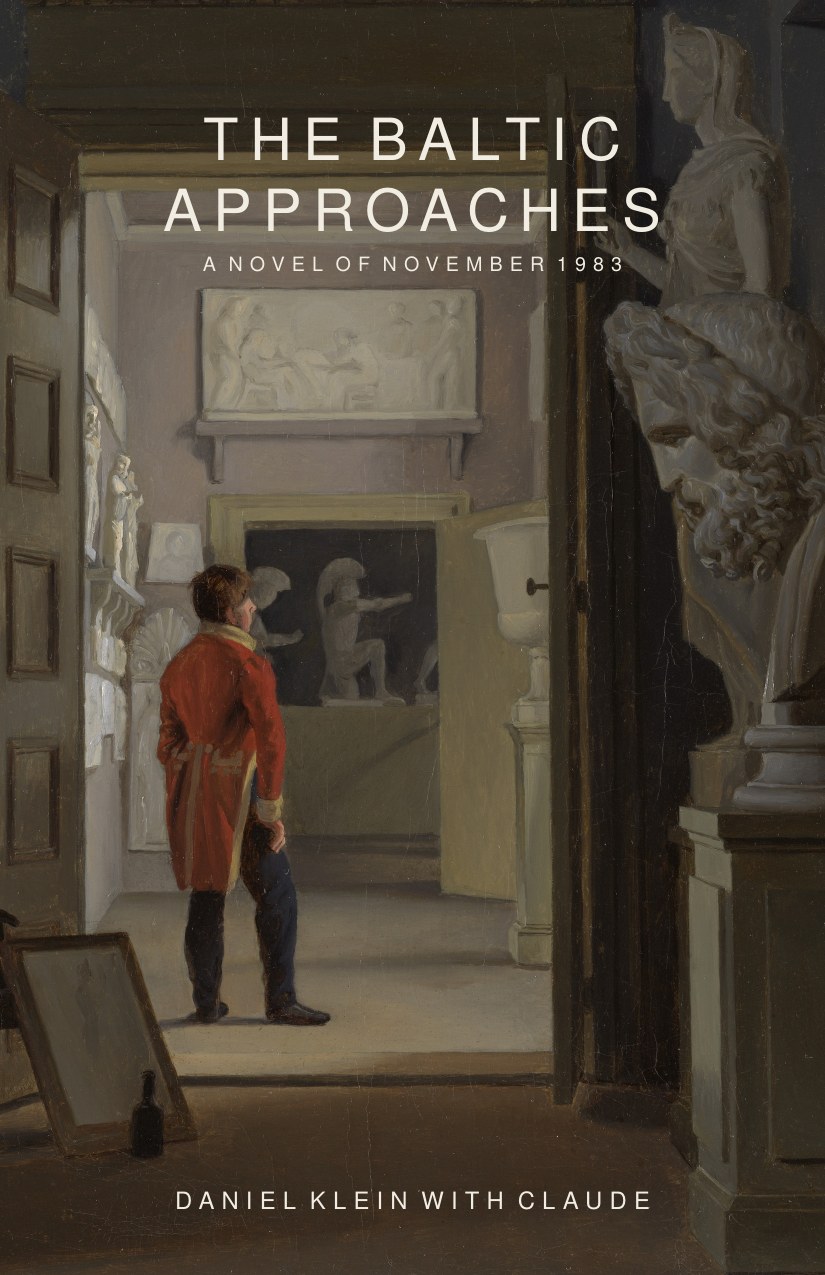
In November 1983 the war comes to the Baltic Approaches — the narrow ground where the Jutland peninsula meets the North German Plain, and the water on either side of it. The Baltic Approaches follows the operations staff of a binational NATO corps at Rendsburg through that war, November into December. It is a staff novel: the ground is an operations room, the instruments are estimates, and the subject is what a headquarters can honestly claim to know. The corps posts its estimates on a wall, prices its own ignorance daily, and settles the account when the bill arrives. Played straight, without hindsight: the staff knows only what it has learned, and pays for the rest.
We were not right. We were solvent.
— from the corps’ final assessment
Three doors
- Buy the book. Trade paperback, $17.95 · Kindle, $9.95 — one listing carries both.
- Read the source. The public repository is the source edition: the manuscript, chapter by chapter, with the research instruments and the complete working record beside it.
- Hand it to an agent. If you use an AI
agent, point it at the repository; the tag of record is
first-312200ZJUL26, andAGENTS.mdat the root is the builder's guide. The license welcomes personal, agent-mediated transformation.
The site serves no book files — by design, not neglect: the store sells the editions, and the repository is the free one.
The theater
Plate I of the book's front matter, drawn from the project's transport atlas of the 1983 Baltic Approaches. Touch a road, rail line, ferry, or town for its atlas record — every capacity figure carries its source grade. The plate holds clean prewar geography and no marks of the war, by design.
How this book was made
This book was written by Claude, a family of large language models made by Anthropic, in working sessions directed, read, and edited by Daniel Klein. The making is documented in a public repository, including an attribution ledger that records every contributing session, the lineage between sessions, and the provenance of the text to the commit.